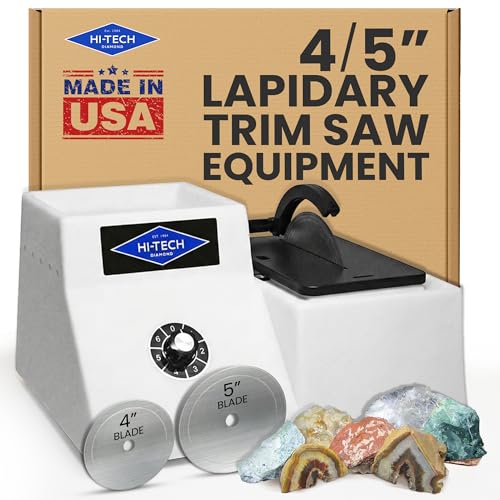
Trim saw
4″ / 5″ trim saw
A compact option for trimming small slabs and preparing preforms, with a choice of two blade diameters.
Check current price See model detailsA better cut starts with the right saw
Find a lapidary saw for the rocks you work with. Compare trim saws, slab saws and blades by the details that actually matter.
Find my saw Explore trim sawsSmall slabs. Precise preforms.

Start with your workpiece
Choose the job first. Then choose the machine.
Measure first. Compare second.
A 10-inch saw does not promise a 10-inch cut. Use the documented limits, the shape of your stock and stable workholding to make a useful comparison.
Understand cutting capacity ↗Documented starting points
A compact option for trimming small slabs and preparing preforms, with a choice of two blade diameters.
Check current price See model detailsA dedicated trim saw for smaller rock work, with standard and vise-inclusive Amazon offerings.
Check current price See model details
A larger bench saw for appropriately sized rough and slab work, offered with or without a vise.
Check current price See model detailsAs an Amazon Associate I earn from qualifying purchases. Check the current listing for price, availability and included accessories.
A quick side-by-side
| Type | Starting material | What to verify | Explore |
|---|---|---|---|
| Trim saw | Slabs and suitable small specimens | Supported height, straight-cut workflow, blade fit | Compare ↗ |
| Slab saw | Suitable rough to slice into slabs | Rock geometry, capacity, workholding and feed | Compare ↗ |
| Diamond band saw | Supported materials and shape-specific jobs | Exact blade type, material and machine instructions | Compare ↗ |
A lapidary saw is used in preparing rock and mineral material for further work, such as slabs and cabochon preforms. The term covers more than one machine type. Start by separating the job of slicing rough from the job of trimming an existing slab.
The right choice depends on the stock you can support, the intended cut and the documented requirements of the saw and blade. Our trim-versus-slab guide explains that decision in more detail.
Measure a few pieces you actually want to work with. Note the starting shape, height at the cut, and next finishing step. A saw that suits those pieces can be more useful than buying around an unusually large specimen or a speculative future project.
Allow room in the budget for appropriate workholding, a suitable blade, the manufacturer’s coolant requirements and cleanup. The beginner guide turns those questions into a practical shortlist.
Keep making better decisions
From rough to a useful plan
Choose between a nodule, a slab and the pattern you want to reveal.
Plan around the shell, cavity and a supportable cutting orientation.
Compare end-grain and lengthwise views before choosing a cut.
Think about inclusions, surface features and the intended blank.
Straight answers
These are some of the questions people ask when choosing a lapidary saw. The linked guides develop each answer with practical comparisons and manufacturer references.
We research documented specifications and explain our assumptions. We do not claim hands-on testing or invent product ratings. Read our editorial policy.
Choose by your first real project. A trim saw may suit purchased slabs; preparing suitable rough into slices calls for a slab-saw comparison. Workholding and usable stock height matter more than a universal best-machine label.
Do not assume it can. A shared blade diameter does not establish suitable speed, workholding or material use. Our tile-saw comparison explains the differences without authorizing unapproved blade or machine substitutions.
Use the exact machine documentation. Blade diameter, exposed blade height and recommended material size are different measurements. The stock must also be stable and supported; do not assume flipping an oversized rock solves a capacity limit.
Compare the complete setup, including machine construction, blade, workholding, support and required accessories. A lower bare-machine price is not the same as a lower ready-to-use setup cost.
Yes, treat it as equipment that can cause injury. Do not rely on claims that a diamond blade is harmless to skin. Follow the exact machine and blade instructions, including guards and personal protective measures.
Verify diameter, arbor, speed rating, construction, material and coolant compatibility. A listing with matching dimensions can still be unsuitable. Unknown specifications need confirmation before use.