Trim saw
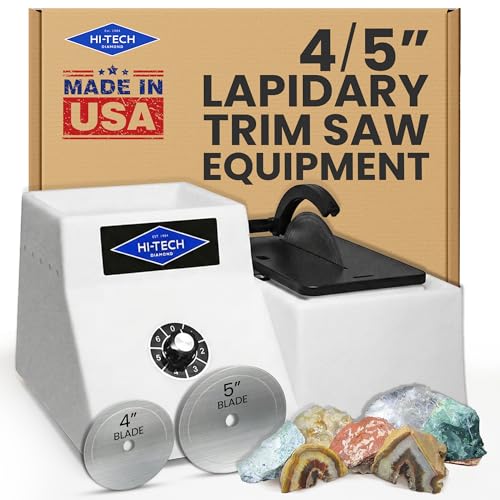
4″ / 5″ trim saw
Saved base 4-inch / 5-inch saw offer; no vise is represented. Confirm the selected blade size, supplied blades and current contents.
Check current price See model detailsChoose your equipment
A lapidary trim saw makes controlled cuts in supported slabs, cabochon preforms and smaller specimens. Choose it around the stock you actually trim and the way you will hold it—not around the largest rock you hope to cut someday.
Choose a trim saw when the repeat job is shaping supported slabs or small pieces into preforms and manageable blanks. The 4/5-inch model favors compact work; the 6-inch model adds a larger table and blade-height envelope. The vise bundle changes workholding, not the saw’s cutting limits.
| Configuration | Documented setup | Useful starting point | What the bundle changes |
|---|---|---|---|
| 4″ / 5″ trim saw | Two included silver notched blades; 1″ or 1.5″ blade height | Smaller faceting material and cabochon preforms where the piece can be supported on the compact table | One verified base-machine offer; no vise is represented in this listing |
| 6″ trim saw | Two included 6″ blade types; 1.75″ blade height | Repeated preform trimming when the larger table and added blade exposure are useful | Base configuration without the saw vise |
| 6″ trim saw + vise | Same 6″ saw family and blade-height limit | Jobs that fit the model-specific clamp and benefit from a controlled carriage | Adds the 6″ vise; the operator still advances it manually |
The manufacturer dimensions above describe the machine and exposed blade, not permission to cut every piece of that height. Apply the manual’s more conservative material guideline, then account for shape, support, blade choice and hand clearance. See the capacity method.
Use the labels and matching photos to separate the base machine from a vise-inclusive bundle. Check the current listing before ordering because availability and included equipment can change.
As an Amazon Associate I earn from qualifying purchases. Check the current listing for price, availability and included accessories.
Saved base 4-inch / 5-inch saw offer; no vise is represented. Confirm the selected blade size, supplied blades and current contents.
Check current price See model details
Saved base 6-inch saw offer; no vise is represented. Confirm the supplied blades and current contents.
Check current price See model details
Saved 6-inch saw and model-specific vise bundle. The manually advanced vise adds workholding; it does not increase the saw’s documented capacity.
Check current price See model detailsMeasure the piece in the orientation of the intended cut. Blade diameter is not usable cutting height. The exposed section of the blade, the manual’s guidance and secure support all constrain the job.
A compact saw can be a good fit when you repeatedly trim purchased slabs. If your usual starting material is irregular rough that needs slicing into slabs, compare the slab-saw workflow first.
A vise can change how a supported piece is held, but it does not make an undersized saw larger. Compare the base machine and bundled accessories separately. Leave usable bench space around the machine.
Buying guides
Choose a first lapidary saw for cabochon trimming or rough rock. Compare workholding, usable clearance, support and the complete setup.
Comparisons
Compare Hi-Tech 4/5- and 6-inch trim saws by capacity guidance, table area, included blades, coolant reservoir and vise bundle.
Projects
Plan cabochon preforms from a slab with an illustrative sizing example, straight relief cuts and accurate saw, blade and slab-yield checks.
Buying and setup
Compare lapidary saw blade diameter, exposed height and conservative rock-height screens without treating them as the same capacity number.